
The Deep Thinking Survey No Talks About
Why this is a pressing issue today

This one survey changed my life.
It opened up to a problem that isn’t discussed but deserved discussion and elaboration, especially when it is an ancestral human trait at stakes.
The name of the survey?
The Think Report 2022: The State of Thinking Today and Into the Future
It was published the computer giant, Lenovo, in honour of the 30th Anniversary of the ThinkPad, one of the company’s flagship laptops, after it was sold by IBM in 2005.
The report surveyed over 1500 people from several countries, including the US, UK, Japan, and Germany, about their personal and professional productivity and how it has been compromised by the way they think in today’s world. They stress a loss of approximately 2 hours a day in productivity due to cognitively taxing events over 2 years, such as distractions, multitasking, and burnout. Productivity has become a hot topic about improving one’s way of approaching life intentionally, and these three examples have been discussed constantly and rightfully throughout the content sphere. But in my opinion, I believe this report highlights an undiscussed root of these effects on a personal and societal level, and the statistics show a desire of these respondents to shift to a new style of thinking.
Namely, deep thinking.
A Downhill towards Survival Thinking
Have you ever noticed this sentiment when you ask someone, “how’s your day going” or “how’s life in general?”
Their answer:
“Surviving.”
It mostly suggests a period of stressful work; pressing responsibilities, demands from your team, etc. It can also refer to their responsibilities outside of work; parenthood, daily errands, financial struggles, etc. There are numerous factors behind this one word, as work takes up about 80k hours of our lifetime. But it can also refer to activities that we don’t think adds to the fear of losing our survival, particularly our lives online. As most of the world have a social media account, it is fitting to consider our contributions, checking on our friends and acquaintances through their Instagram stories and pictures, reading DMs, and of course, the “odd” doomscroll.
With too many responsibilities on our daily palette, it is contributing to what the report calls “Survival Thinking” and subsequently, “The Thinking Gap.”
Too many things on our minds
Too many distractions
Too much fatigue.
It also cites other specific factors like COVID-19, war, human rights, and other issues mentioned on our news feeds, though surprisingly no discussions of social media and even our current sleep epidemic. But the overarching term to describe these personal and global factors is cognitive overload.
In percent, how much energy do you think your brain consumes?
At rest.
That is actually a lot.
Our brains are the highest energy-consuming organ in the body.
This is because it is trying to keep us alive. It provides homeostatic mechanisms to restore normality in our physiology whenever an unwanted deviation or threat occurs, e.g. changes in body temperature. The energy budget is also spent on memory saving, prediction making, decision making, and deep thinking, and research has surprisingly outlined an increase of only 5%. But the brain has evolved to be energy-efficient through a series of computational methods despite having the highest energy expenditure, and we can argue that this small 5% increase showcases this efficiency.
But here’s what our brains have not evolved for:
Chronic Stress.
In small occasional bouts, stress is beneficial. It trains your mind and body to adapt to unfavourable circumstances, like high intensity exercise or challenging problems to solve.
This must be followed by long periods of rest.
But when stress crosses the line and takes up our lives every day for a long period of time that it becomes chronic, then we are falling into a problem. Chronic stress is metaphorically a type of information overload, a failure to fully process a bombardment of factors that require attention and focus to prevent consequences to ourselves and our community.
During chronic stress, a few regions of the brain are implicated in terms of size:
Amygdala (⬆️) - emotional centre that detects threats and becomes more reactive to threats.
Hippocampus (⬇️) - memory centre that stores and forms long-term memories.
Prefrontal cortex (⬇️) - control centre responsible for decision-making.
Now let’s go back to the problem of survival thinking.
With chronic stress in the mix, it limits the brain to the base function of keeping us alive and has little to no capacity for quality thinking. This sentiment of surviving isn’t only to physical threats, but also to the extortionate amount of content we consume online, particularly when sensitive issues are being discussed. This is why chronic stress is a form of information overload. We resort to reactive and emotional responses due to the enlarged amygdala, not hold on to information the brain doesn’t deem important due to impaired hippocampus, or favour short-term decisions at the cost of the long-term due to the prefrontal cortex on vacation.
To summarise this section, constant exposure to chronic stressors like information overload will have a dramatic impact on productivity and hence the creation of the Thinking Gap. And to be clear, productivity being defined as meaningful work towards our goals rather than only doing more in less time. To address this problem, not only does the report describe the needed shift, but also describes a powerful desire from the respondents to make this shift.
A Desire for Deep Thinking
Let’s explore the statistics that illustrate this desire. Out of all respondents:
80% desire new approach to thinking
34% spend time on deep thinking
Between 60% and 85% appreciate benefits of deep thinking including living more intentionally.
81% appreciate the increased self-awareness from deep thinking
Between 50% and 80% believe that deep thinking can encourage kindness, peace and increase our collective humanity.
These numbers speak volumes at a personal and societal level.
As the respondents spoke out about the factors that impact their productivity, they also speak of hope that by changing the way we think can significantly boost the way we live.
As you can expect from a computer giant, the solutions outlined were using technology in a healthy way. But I want to focus on the statistics as the purpose of this piece is to raise awareness of the problem.
Four of these selected statistics cross a whopping 80%, showing how appreciating depth in what we consume and do can lead to intentional living and societal problem-solving. The report refers to this deep thinking as higher-order thinking, which describes complex cognitive processes in certain activities beyond remembering. This includes critical thinking, collaboration with others, self-reflection, and problem-solving.
Higher-order thinking is coined by educational psychologist, Benjamin Bloom, who devised a categorisation of thinking skills dependent on educational goals. The more complex a problem or subject, the higher the need for the upper categories, and the more cognitive power required.
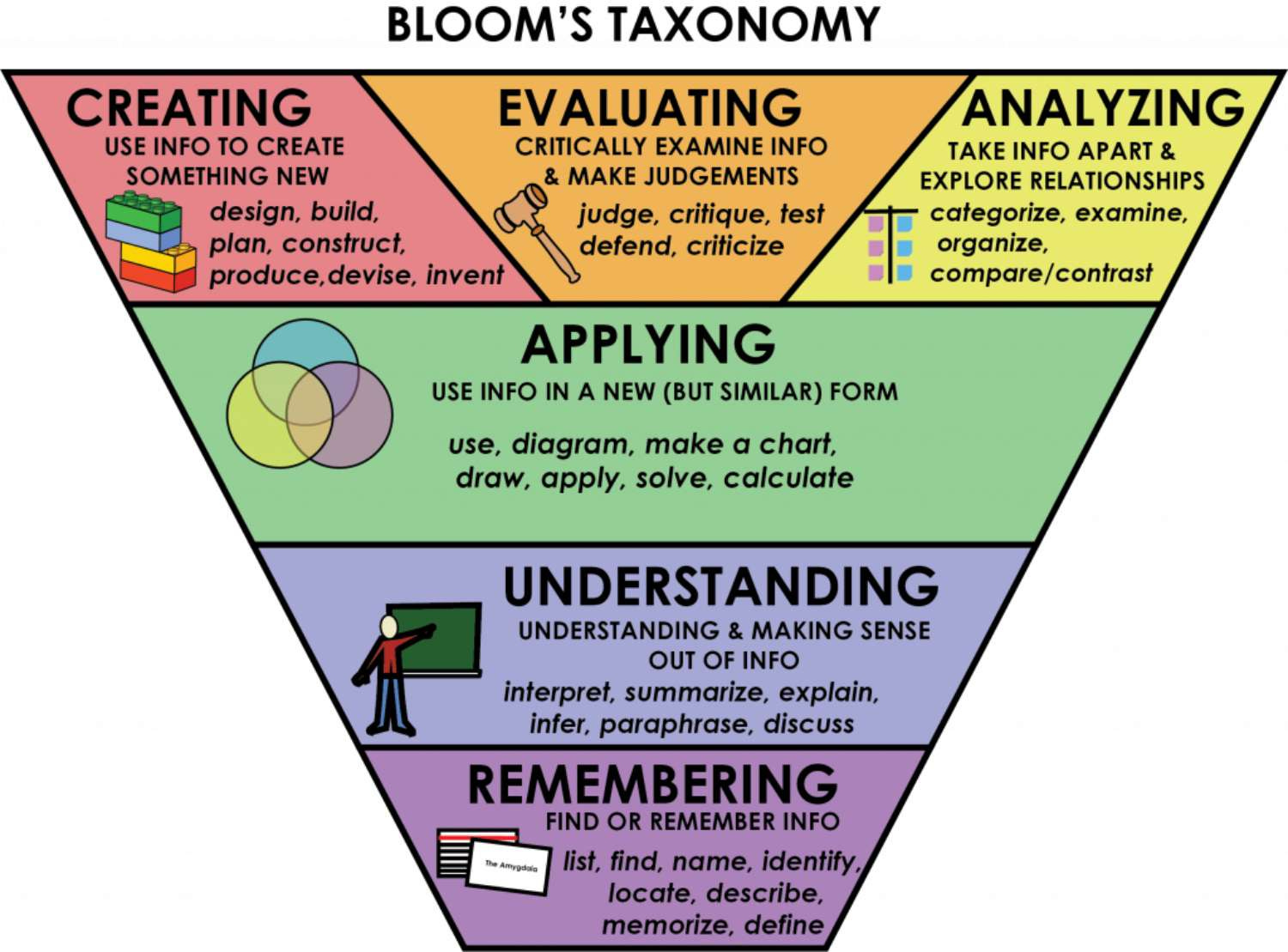
What stands out from higher-order thinking is not only the presence of finding relationships or patterns in information, but it treats the problem or subject as curious and meaningful inquiry. The connections you find have some relevance with your personal life, as they conjure further research questions to make learning and thinking more active.
It is the sense of meaning and curiosity that fuels the autonomy, mastery, and purpose when we transition from a state of survival to a pursuit of depth. And when we create the time and space, this is when we feel at a personal level - intentional living and self-awareness, and at a societal level - solving systemic problems and potential restoration of harmony.
I want to repeat, this survey has changed my life.
It’s the reason why pursuing the problem of declining deep thinking became a part of my life’s work.
Every issue discussed on social media stems from how the quality of research and deep thought invested.
But as the problems become increasingly complex, lacking in understanding and acknowledgement, not to mention AI being added, reports like this survey and many others stress a new approach to our thinking.
Which is why I’ve created an online assessment to help you find your starting point in thinking with curiosity and depth.
It is completely free and takes around 3 mins to complete.
As a thank you, you’ll receive a free bonus and join the waitlist for our future project.
👉 Click here to Take the Assessment 👈
Thank you!